Georgetown Rec Pool Monitoring: Setup and Readings
By Alex Rivera · Published · Updated · 4 minutes read
Running a monitored pool at a busy municipal recreation center is a different job from watching a backyard pool. Between lap swim, lessons, and open swim, Georgetown Rec's water can see hundreds of bathers a day, and bather load is one of the fastest ways to drag free chlorine down and push combined chloramines up.
This guide covers the practical side of pool monitoring at a facility like Georgetown Rec: where to place sensors and sample points, which readings deserve attention during heavy-use blocks, how to handle alerts without overcorrecting, and what the realistic cost and maintenance picture looks like over a season.
Where to Place Sensors and Sample Points
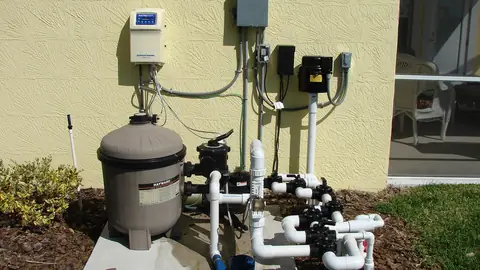
A single probe in the pump room tells you what the filter is seeing, not what swimmers are standing in. At a rec center with a main lap pool and a warmer teaching pool, you want at least one continuous reading per body of water, taken from a flow cell on the return line after filtration. That placement catches the water actually going back to bathers.
For pH and free chlorine, keep the flow cell at a steady 0.5 to 1.5 gallons per minute and make sure the probe tip stays submerged with no air pockets. Take weekly grab samples from the deep end and the shallow end with a handheld photometer and compare them to the inline readings; a drift of more than 0.2 pH or 0.3 ppm free chlorine usually means the probe needs cleaning or recalibration.
- One continuous sensor per pool body, not one per building
- Flow cell on the filtered return line, 0.5–1.5 gpm
- Weekly handheld cross-check at deep and shallow ends
- Log bather counts so you can correlate load with chlorine demand
Target Ranges for a High-Bather-Load Pool
Public pools generally run free chlorine in the 1–3 ppm range with pH held between 7.2 and 7.6, but a rec center during a busy Saturday may need to sit at the higher end of that band. Cyanuric acid above roughly 50 ppm slows chlorine's ability to kill pathogens quickly, which matters more in a public setting than in a quiet backyard pool.
Combined chloramines are the reading that tells you the truth about water quality. Keep them below 0.5 ppm; when they creep toward 0.4 ppm with strong chlorine smell and red eyes, it is time to shock rather than simply raise the feed rate. Alkalinity in the 80–120 ppm range keeps pH from swinging when you add make-up water.
- Free chlorine: 1–3 ppm, run higher end at peak load
- pH: 7.2–7.6
- Combined chloramines: under 0.5 ppm
- Total alkalinity: 80–120 ppm
- Cyanuric acid: 30–50 ppm for a public pool
Handling Alerts Without Overcorrecting
The most common mistake after a chlorine or pH alert is dumping in a large dose and walking away. A 25-yard lap pool holds roughly 150,000 to 200,000 gallons, so a gallon of 12.5% liquid chlorine lifts free chlorine by only about 0.6 to 0.8 ppm. Dose in steps, circulate 20 to 30 minutes, and re-read before adding more.
Distinguish between a true water problem and a sensor problem. If pH reads 8.4 but the handheld meter says 7.5, clean the probe and recalibrate before touching the chemistry. If you are new to decoding system messages, our guide to interpreting pool monitoring alerts walks through common false alarms and what each one usually means.
- Dose in increments and re-test after 20–30 minutes
- Verify with a handheld meter before large corrections
- Check probe condition first when one reading moves alone
- Shock at closing time so bathers return to stable water
Testing Cadence and Record Keeping
Inline sensors do not replace manual testing. A workable schedule for a rec center is a handheld check twice a day during the week and every two hours during peak weekend blocks, plus a full chemical panel once each morning before opening. Log free chlorine, combined chloramines, pH, alkalinity, and bather count in the same place so patterns emerge.
Those logs are also your defense during a health inspection and your best tool for spotting a failing probe before it causes a closure. If you want a broader baseline on frequency, how often should you test your pool water covers how cadence should change with bather load and season.
- Full panel each morning before opening
- Twice-daily handheld checks on weekdays
- Every two hours during peak weekend blocks
- Record bather counts alongside chemistry readings
Sensor Maintenance Through the Season
pH probes in a municipal pool foul faster than most people expect, often within two to four weeks, because of body oils, sunscreen, and the higher bather load. Plan on cleaning the probe tip with a soft cloth and mild detergent solution every two weeks, and replace the probe every 12 to 18 months, sooner if calibration drifts persistently.
Free chlorine sensors need their own attention: membrane or sensor cap replacement every three to six months is typical, and the electrolyte should be changed on the manufacturer's schedule. Keep a spare probe on the shelf so a failed unit does not force a manual-only week; our step-by-step on how to calibrate your pool pH sensor covers the two-point procedure most inline systems use.
Cost and Budget Expectations
For a facility running two pools, expect monitoring hardware in the low thousands to roughly $6,000 depending on how many parameters you track and whether you need cloud logging. Consumables, calibration solutions, probe replacements, and reagent refills typically add a few hundred dollars a season, with pH and chlorine probes being the recurring line item.
Subscriptions for cloud dashboards and alerting usually run from about $30 to $150 per month per site, and many operators offset that by cutting chemical waste and avoiding emergency closures. Our breakdown of pool monitoring service costs in 2024 and the tips on how to save money on pool monitoring subscriptions give realistic numbers to put in a budget request.
| Parameter | Target range | Action threshold | Check frequency |
|---|---|---|---|
| Free chlorine | 1–3 ppm | Below 1.0 ppm | Continuous + twice daily |
| Combined chloramines | Under 0.3 ppm | 0.4 ppm or higher | Twice daily |
| pH | 7.2–7.6 | Outside 7.0–7.8 | Continuous + twice daily |
| Total alkalinity | 80–120 ppm | Below 70 or above 140 ppm | Daily |
| Cyanuric acid | 30–50 ppm | Above 50 ppm | Weekly |
| Calcium hardness | 200–400 ppm | Below 150 ppm | Weekly |
- Monitor each pool body separately and cross-check inline readings with a handheld meter weekly.
- Hold free chlorine at the higher end of 1–3 ppm during peak bather load and keep chloramines under 0.5 ppm.
- Dose chemicals in small steps with circulation time rather than making large corrections after an alert.
- Budget for pH and chlorine probe replacement as recurring costs, and keep a spare on the shelf.
Alex has spent over a decade managing pool water quality for residential and commercial properties. He founded WaterWatchersSignup to help pool owners simplify monitoring with practical tools and honest advice. His focus is on making water chemistry approachable for everyone.