Pool Water Monitoring Service Cost: What to Expect
By Alex Rivera · Published · 4 minutes read

A pool water monitoring service isn't one product with one price. It's a bundle of sensors, a controller or gateway, connectivity, software, and sometimes a human who reviews alerts and adjusts dosing. Each piece carries its own cost, and vendors package them very differently, which is why quotes for apparently similar services can differ by several hundred dollars a year.
This guide breaks down what you actually pay for: hardware, installation, recurring subscriptions, and the extras that show up later on the invoice. Ranges below reflect typical residential and small commercial pricing in North America and Western Europe in 2024, so treat them as planning figures rather than quotes.
What a Monitoring Service Actually Includes
Most services combine a sensor probe or floating unit that reads pH, ORP (oxidation-reduction potential, a proxy for sanitizer activity), and water temperature, sometimes plus conductivity or salinity. That data travels to a hub and then to a cloud dashboard or app. The subscription covers hosting, alerting, firmware updates, and support. Higher tiers add automated dosing control, historical reporting, and human review of readings.
The split between hardware and service matters when comparing quotes. Some vendors sell the device outright and charge a modest monthly fee; others bundle everything into a multi-year subscription with the hardware included. Ask directly which model you are being quoted, because a low monthly figure on a three-year contract can cost more overall than buying the device up front.
- Sensors: pH, ORP, temperature as standard; salinity and pressure optional
- Controller or gateway: local hub plus cloud connection
- Software: dashboards, alerts, history, user accounts
- Optional: automatic chemical dosing, professional review, compliance reports
Equipment and Installation Costs
A residential monitoring kit typically runs $400 to $1,200 depending on sensor count and build quality. Basic float-style units sit at the low end; inline probe systems plumbed into the return line cost more but read continuously and need less maintenance. Probes are consumables: pH and ORP sensors usually need replacement or refurbishment every 12 to 24 months, at roughly $80 to $250 each.
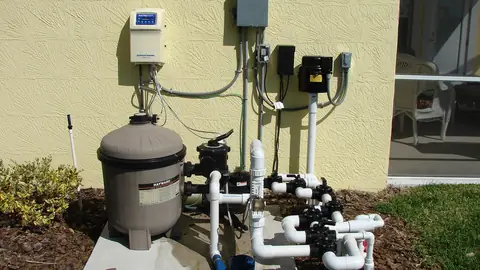
Installation for an inline system is usually a one-time plumbing and wiring job, commonly $150 to $500 for a residential pool, more if the equipment pad needs modification. Float units need no installation, which is part of their appeal. If you already have automation from a major pool controller brand, check whether the monitoring service integrates with it before buying separate hardware.
For commercial pools, add flow cells, sample lines, and enclosures. A compliant inline setup with dosing control commonly lands between $3,000 and $10,000 installed, before any monthly service fee.
Subscription Fees: The Recurring Cost
Residential subscriptions generally run $20 to $60 per month for monitoring and alerting, with automated dosing control tiers often $50 to $120 per month. Annual prepayment sometimes saves 10 to 20 percent. Cellular connectivity, if the pool has no Wi-Fi coverage, usually adds $5 to $15 per month because it carries a data plan.
Commercial and multi-property accounts are priced differently, often per pool or per site. Expect $100 to $400 per month per pool for monitoring with reporting, and more where chemical dosing control and compliance documentation are included. Vacation rental portfolios often justify the higher tier because a single missed imbalance can close a pool during peak booking season, a point covered in our guide to remote monitoring for vacation homes.
Hidden and Overlooked Charges
The recurring fee is rarely the whole story. Common extras include activation or onboarding fees ($50 to $200), probe replacement not covered by warranty, calibration solutions and reagents (often $30 to $100 per year), and charges for extra user accounts or API access. Some contracts index the subscription to inflation or raise it after year one.
Watch for data ownership and exit terms. If you stop paying, does the hardware keep working locally, and can you export your history? Also check whether the vendor requires their own installer and what a service visit costs outside warranty. A $15 monthly saving is meaningless if a single callout is billed at $150.
Finally, budget for chemicals. Monitoring tells you what the water needs; it doesn't supply chlorine, acid, or stabilizer. Automation often reduces chemical spend by keeping parameters tighter, but it doesn't eliminate the line item.
- Activation and onboarding fees
- Probe and sensor replacement intervals
- Calibration solutions and reagents
- Out-of-warranty service visits
- Contract escalation clauses and exit terms
DIY Testing vs. a Paid Service
A manual test kit costs $20 to $80 and reagent refills a few dollars per test. Testing twice a week takes perhaps ten minutes. A monitoring service costs hundreds per year, so the case for it is not laziness; it is frequency, consistency, and response time. Continuous sensors catch swings that twice-weekly manual testing misses, especially after heavy bather loads or storms.
The honest middle ground is manual testing with a disciplined routine plus a paid service for the periods you can't be present. For most residential pools, a basic alerting subscription is enough; dosing control earns its price when the pool is large, heavily used, or unattended for stretches. A fuller comparison sits in DIY testing versus professional monitoring.
Regional Price Differences
North American pricing tends to be the highest for hardware, with subscriptions in the middle of the global range. Western European pricing is similar on hardware but subscriptions are often bundled into broader building or facility service contracts, which can make line-item comparison difficult.
In Australia and New Zealand, strong domestic competition on pool electronics keeps hardware prices moderate, and cellular data plans are comparatively cheap, so connectivity surcharges are lower. In parts of Asia and the Middle East, hardware may be imported at a premium while local support contracts are priced competitively. Wherever you are, get at least two written quotes that separate hardware from recurring fees.
How to Judge Whether the Price Is Fair
Work out the three-year total cost of ownership, not the headline monthly fee: hardware, installation, subscription, consumables, and expected service visits. Compare that number across vendors rather than comparing monthly rates. Then check what the service actually promises: alert latency, support hours, whether a human reviews readings, and what happens during an outage.
Reliability and support quality dominate long-term value. A cheap subscription with slow alerts or unreplaced sensors costs more in water problems than a well-supported one. If you run a commercial pool, compliance reporting is not optional, and the pricing structure changes accordingly, as set out in the commercial pool compliance checklist.
| Service type | Upfront hardware | Monthly fee | Probe life | Best suited for |
|---|---|---|---|---|
| Float monitor, app alerts | $300–$600 | $20–$40 | 12–18 months | Residential pools, seasonal use |
| Inline probe kit, no dosing | $700–$1,200 | $30–$60 | 12–24 months | Year-round residential pools |
| Inline kit with dosing control | $1,500–$3,500 | $50–$120 | 12–24 months | Large or heavily used pools |
| Commercial monitoring with reporting | $3,000–$10,000 | $100–$400 | 12–24 months | Hotels, gyms, public pools |
| Cellular connectivity add-on | — | $5–$15 | — | Pools without Wi-Fi |
| Professional review / management tier | — | $60–$200 | — | Unattended or rental pools |
- Compare three-year total cost, not monthly fees; hardware and consumables often outweigh the subscription.
- Budget $80–$250 per probe every 12–24 months and $30–$100 a year for calibration supplies.
- Cellular connectivity adds $5–$15 monthly where Wi-Fi doesn't reach the equipment pad.
- Dosing control pays off mainly for large, heavily used, or unattended pools.
Alex has spent over a decade managing pool water quality for residential and commercial properties. He founded WaterWatchersSignup to help pool owners simplify monitoring with practical tools and honest advice. His focus is on making water chemistry approachable for everyone.