Georgetown Rec Pool Water Monitoring Services
By Alex Rivera · Published · Updated · 4 minutes read
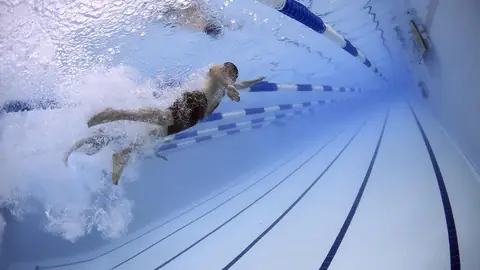
A public recreation center pool carries more water traffic than a backyard pool ever will: lap swimmers before work, learn-to-swim classes mid-morning, water aerobics at noon, and open swim all afternoon. Every one of those groups drags in sweat, sunscreen, and organic matter, and the Georgetown Rec pool has to stay within health-department limits through all of it. Monitoring is what makes that possible without guesswork.
This guide covers what a monitoring service actually does for a facility like Georgetown Rec, which numbers matter, how alarms get handled, and where staff intervention still beats automation. If you swim there, you will also learn what the readings on the poolside display mean and when to speak up.
What Monitoring Covers at a Public Facility
At a recreation center, a monitoring service is not just a probe in the water. It typically covers continuous sensing of free chlorine, pH, and ORP (oxidation-reduction potential), plus temperature and sometimes turbidity. Readings log every few minutes to a cloud dashboard, and the system pushes alerts to on-call staff by text or email when a value drifts outside a set band. That is a meaningful upgrade over twice-daily manual tests, because a bather load spike at 6 p.m. can move free chlorine noticeably within an hour.
The equipment itself is modest: a flow cell tapped off the return line, reagent or probe-based sensors, and a controller that can signal the chemical feed pumps. Most rec centers run the monitor alongside, not instead of, the existing chemical automation. The monitor is the watchdog; the feed system is the hand that adjusts. Keeping those roles separate makes troubleshooting far easier when something goes wrong.
- Continuous logging of free chlorine, pH, ORP, and temperature
- Text or email alerts to on-call operators
- Trend history for health inspections
- Integration with existing chemical feed pumps
Chemistry Targets the System Watches
Most U.S. health codes for public pools set free chlorine between 1 and 4 ppm for unstabilized chlorine, pH between 7.2 and 7.8, and ORP at or above 650 mV as a secondary disinfection check. Cyanuric acid, if used, is commonly capped around 30 to 50 ppm for public facilities, lower than the 70 to 80 ppm some residential pools run. Georgetown Rec swimmers will see a poolside board showing these values, and the numbers should sit comfortably inside the bands, not pinned to the edges.
Temperature matters more than people realize. A rec center pool held at 80–84°F for lessons and aerobics consumes chlorine faster than a cool lap pool at 78°F. Combined chlorines, the source of that sharp "pool smell," build when free chlorine is not keeping up with bather waste. Good monitoring catches the early slope of that curve, before the smell is obvious at the door.
If you want the underlying logic, Understanding Pool Water Chemistry: A Beginner's Guide explains why pH and chlorine are so tightly linked, and How Often Should You Test Your Pool Water? covers why continuous sensing beats daily spot checks in heavy-use pools.
How Alerts Get Handled
An alert is only useful if someone acts. At a well-run facility, the monitoring platform routes alarms to a primary and backup operator, with escalation if no one acknowledges within 10 to 15 minutes. A low-chlorine alert might mean the feed drum ran dry, the pump lost prime, or bather load simply outran the setpoint. A pH swing often traces to a stuck feeder or a CO2 system issue. Staff log the response and the corrective action, which is exactly what an inspector wants to see.
Not every alert deserves a shutdown. A brief blip that self-corrects within one logging interval is usually noise from a bubble in the flow cell or a calibration drift. Persistent readings are the ones that matter. Our guide to How to Interpret Pool Monitoring Alerts walks through the common patterns so on-call staff do not overreact to a single bad sample.
Where Humans Still Beat Sensors
Sensors measure what they are built to measure. They do not tell you the pool is cloudy because the filter needs backwashing, or that a group of swimmers arrived straight from a sunscreen-slathered picnic. Visual checks, a hand test with a comparator kit once or twice per shift, and a quick look at the flow meter remain part of the routine. Treat the monitor as the primary trend tool and manual testing as the periodic sanity check.
Calibration is the other human job. pH probes drift and chlorine sensors foul, especially in a busy pool with high combined chlorine. A monthly calibration with fresh buffer solution, plus membrane or electrode cleaning every few weeks, keeps readings trustworthy. Skipping that step is how a facility ends up trusting a number that has quietly drifted half a point off.
Choosing and Installing the Right Setup
Facilities differ in size, budget, and existing automation, so there is no single correct package. A small therapy pool may only need pH and ORP; a 25-yard, six-lane rec pool with a busy lesson program benefits from free chlorine, pH, ORP, temperature, and cloud logging with role-based alerts. Our buyer's checklist lays out the questions to ask before signing a contract, including who owns the data and what happens if the vendor's cloud goes down.
Installation is a project, not an afternoon. Tapping the return line, mounting the flow cell, wiring the controller, and commissioning the sensors usually takes a qualified technician most of a day. Some centers handle the simple parts in-house. The trade-offs are covered in Pool Monitoring System Installation: DIY vs. Professional, and if the question is whether a service is worth it at all, DIY Pool Water Testing vs. Professional Monitoring gives a fair comparison.
| Parameter | Target range | Alert below | Alert above | Check frequency |
|---|---|---|---|---|
| Free chlorine | 1–4 ppm | 1.0 ppm | 4.0 ppm | Continuous |
| pH | 7.2–7.8 | 7.2 | 7.8 | Continuous |
| ORP | 650–800 mV | 650 mV | 850 mV | Continuous |
| Combined chlorine | <0.4 ppm | — | 0.4 ppm | Manual, per shift |
| Cyanuric acid | 30–50 ppm | 20 ppm | 60 ppm | Weekly, manual |
| Temperature | 78–84°F | 76°F | 86°F | Continuous |
What Swimmers Should Watch For
You do not need a test kit to judge a pool. Clear water, a visible main drain, tile lines you can see from the deck, and no strong chemical odor are good signs. A sharp chlorine smell usually means combined chloramines are high, not that the pool is over-chlorinated. If the poolside display shows free chlorine below 1 ppm or pH outside 7.2–7.8 for long, mention it to the front desk. Staff would rather hear it early.
Ask about monitoring frequency if you are curious. A facility that logs continuously and can show you recent readings is doing more than one that tests twice a day by hand. That transparency is a reasonable thing to expect from a public recreation center.
- Continuous sensing catches bather-load swings that twice-daily manual tests miss entirely.
- Treat the monitor as a trend tool and keep manual comparator checks as a per-shift sanity check.
- Route alerts to two operators with a 10–15 minute escalation window, and log every response.
- Monthly calibration and regular probe cleaning keep readings honest; drift is the biggest failure mode.
Alex has spent over a decade managing pool water quality for residential and commercial properties. He founded WaterWatchersSignup to help pool owners simplify monitoring with practical tools and honest advice. His focus is on making water chemistry approachable for everyone.